DR GPT™ LabsSTSports Toughness
Blog

Mental toughness for young athletes: the 10-second mistake reset

A soccer ball on the grass beside a sideline bench with a water bottle and a coach's whistle, on an empty youth soccer field at dusk.

By , board-certified emergency physician · October 25, 2026

Parents ask me how to make their kid mentally tougher. My answer surprises them: mental toughness is not about never feeling nervous. It is how fast a young athlete resets after a mistake. That is a skill, and like any skill, it can be trained at home in a few minutes a day.

The 10-second mistake reset

  1. Physical cue. Pick one small movement that means "done": clap once, wipe the hands, or tug the jersey.
  2. One slow breath. In through the nose, longer out through the mouth. A slow exhale calms a racing heart.
  3. Cue word. Two or three words that point to the next play: "Next ball." "Eyes up." "Win the next one."

Practice it at home after small mistakes, like a missed free throw in the driveway, so it is automatic in a real game.

Talk like a coach, not a critic

Kids copy the voice they hear most. Swap "I always mess up" for "Next ball, eyes up." Short, kind and specific beats long and harsh, every time.

Grade what they control

Effort, attitude, coachability, teamwork, focus and bounce-back are all things a player controls. Goals scored are not. My free player report card grades only the first list, which is the point.

Toughness never means playing hurt

As an emergency physician, this is my hard line. A possible head injury means the player comes out and stays out until a clinician clears them. When in doubt, sit them out. Collapse, trouble breathing, or a head injury with vomiting, confusion or worsening headache means call 911.

Start with the mistake reset, then make a report card after the next game.

I speak on this to hospital boards, associations and conference stages. Book me to speak, or read more at https://www.HarveyCastroMD.com.

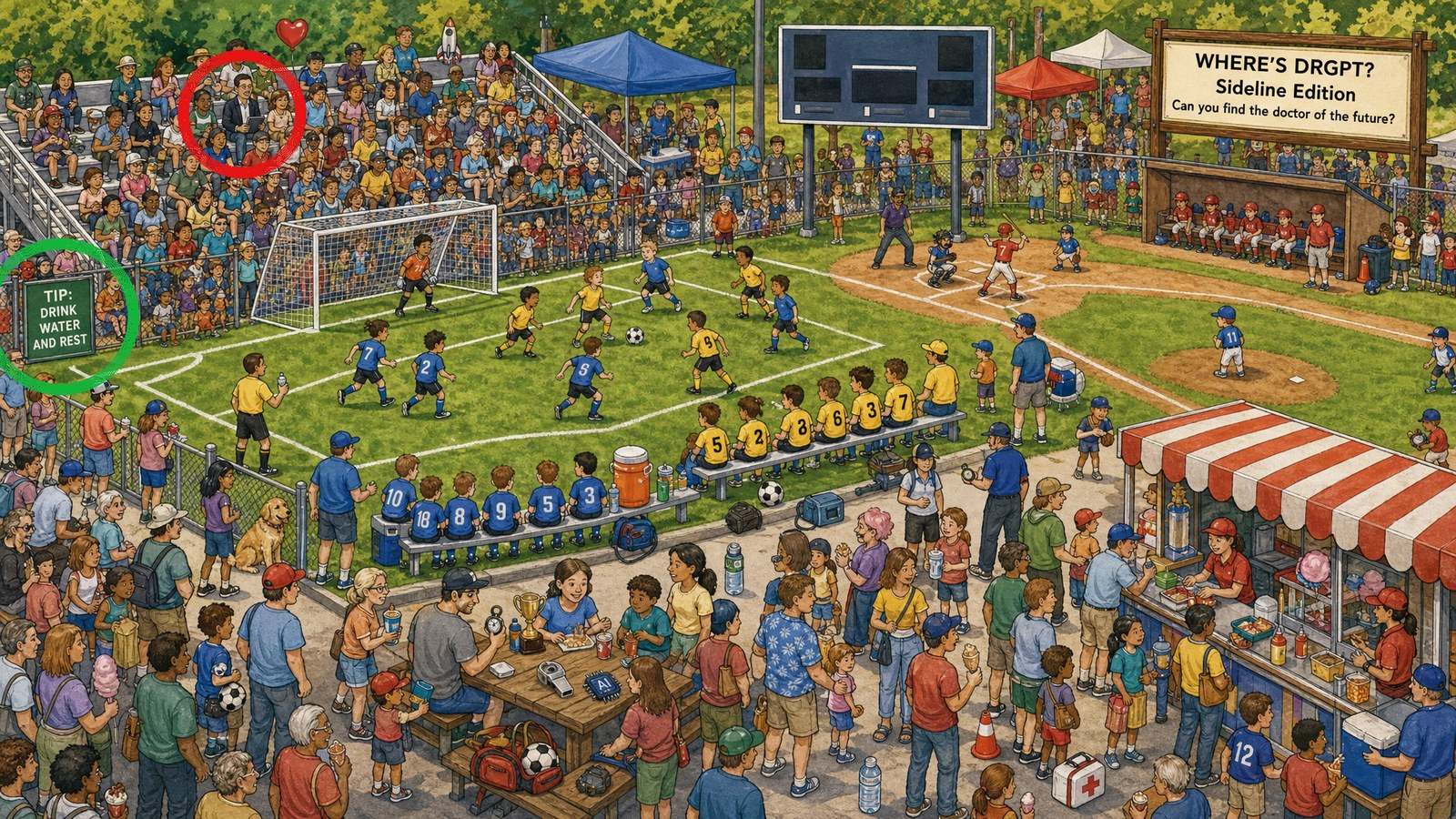
Can you find DrGPT?

Hand-drawn hidden-object illustration of a sunny youth sports complex: packed bleachers, a soccer game, a baseball diamond, team tents and a snack stand. A sign reads "Where's DrGPT? Sideline Edition" and a green sign reads "Tip: Drink water and rest."

Clue: I'm sitting with the parents in the bleachers, cheering from behind my tablet.

Show the answerThe same illustration with a red circle around DrGPT and a green circle around the tip sign.

Upper left, in the bleachers about three rows from the top, in a charcoal blazer with a tablet.

Sources

Education only, not medical advice. In an emergency, call 911.

More from the blog

Common questions

How can I help my child be mentally tougher in sports?

Teach a quick reset after mistakes: a physical cue, one slow breath and a short cue word. Practice it at home so it becomes automatic in games.

Should a young athlete play through a possible concussion?

No. Remove the player from play and do not return them until a clinician clears them. When in doubt, sit them out.

Written and medically reviewed by , board-certified emergency physician. Last reviewed October 25, 2026.

About the author.
ST

Share this page

Point a phone camera at the code, or send the link to someone who needs it.

Download QR code

Post it: LinkedInFacebookXWhatsAppEmail

Free branded QR codes by QR Medic, a DR GPT™ Labs tool.

Book Harvey to speak. I speak on AI in healthcare.
Harvey Castro, MD, MBA: board-certified emergency physician, five TEDx talks, keynotes in English and Spanish.
Book Harvey to speak
Get my free DR GPT™ newsletter
Plain-language health and AI updates from an ER physician, about twice a week. New free tools land there first.
Subscribe free